Preparing future Witsies for an AI-driven world
Wits University OFFICIAL·


Wits University OFFICIAL·
Wits University OFFICIAL·
International Livestock Research Institute (ILRI)·
Featured
University of Cape Town South Africa (UCT)·21 October 2026·Health and Medicine
Researchers at UCT's Desmond Tutu HIV Centre are trialling long-acting injectable HIV treatment to help young people stay on their medication.
Watch nowInternational Livestock Research Institute (ILRI)·
The Royal Institution·
KEMRI-Wellcome Trust·
University of Cape Town South Africa (UCT)·
Africa Rice Center (AfricaRice)·
Hank Green explains why heart cancer is so rare and what scientists have learned about the reason.
SciShow·
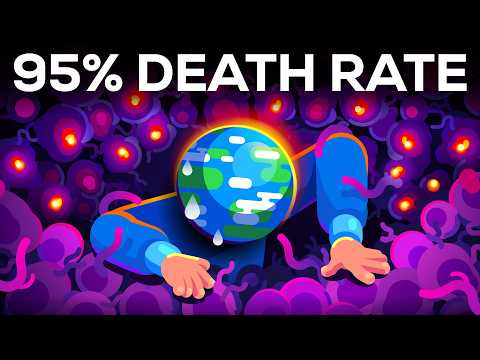
Kurzgesagt explains how death unfolds as a gradual process in the body's cells rather than a single moment.
Kurzgesagt – In a Nutshell·
SciShow tells how four ultra-smooth spheres in space were used to test two tiny effects of general relativity.
SciShow·
A TED-Ed lesson tracing how salt, a biological necessity and food preservative, shaped human civilisations.
TED-Ed·
Google DeepMind researchers explain how AlphaGenome 2 uses AI to read non-coding DNA and find disease-causing mutations.
Google DeepMind·
Kenya's agricultural research body explains how East Coast Fever spreads, the signs farmers should watch for and how…
KALRO·
An ILRI tutorial showing farmers how to estimate an animal's weight with a simple heart-girth tape measurement.
International Livestock Research Institute (ILRI)·
The South African Medical Research Council reviews 20 years of progress, and the gaps that remain, in tackling…
South African Medical Research Council·
Africa CDC Director General Dr Jean Kaseya discusses accountability in the continental Ebola response.
Africa Centres for Disease Control and Prevention·
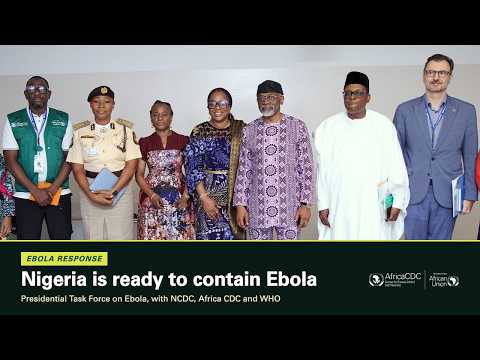
Nigeria's Presidential Task Force on Ebola sets out the surveillance and emergency systems it says will contain the…
Africa Centres for Disease Control and Prevention·
Why the Ebola outbreak in the Democratic Republic of the Congo is not yet under control, from two…
Africa Centres for Disease Control and Prevention·
Olusegun Obasanjo on putting African scientific talent to work for the continent.
African Academy of Sciences·
Our pick of the week's science films in your inbox.
Universities and research institutes can send us films about their work for Science TV.
Submit a research videoKurzgesagt tells the story of surviving late-stage cancer and explains the science behind the treatment.
Kurzgesagt – In a Nutshell·
SciShow explains what makes something a vitamin and why letters such as F and G are missing.
SciShow·
A TED-Ed animation on how a year without brushing would affect teeth, gums, the oral microbiome and general…
TED-Ed·
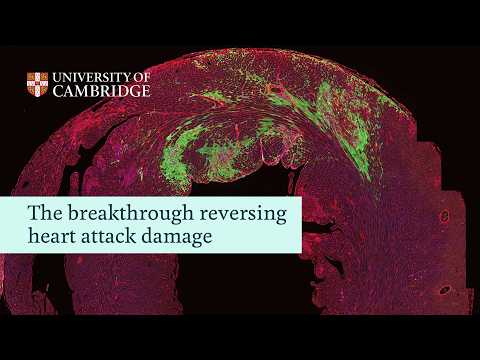
Cambridge researchers describe a treatment that helps heart muscle repair itself after a heart attack, so far tested…
Cambridge University·
How a large clinical trial found that a common, cheap drug saved around a million lives during COVID-19.
Wellcome·
The story of the UK's first national survey of sexual attitudes and lifestyles, and how it shaped health…
Wellcome·
SciShow explains how radioactive material from nuclear waste is being used to treat cancer.
SciShow·
New research suggests Parkinson's disease may begin outside the brain.
nature video·
How a study in Wales is measuring the risk extreme heat poses to pregnant women and their babies.
Wellcome·
SciShow introduces five plants and animals that have adapted to thrive alongside fire.
SciShow·
SciShow explains why great white sharks are under threat in two locations for two different reasons.
SciShow·
A soil ecologist takes you through the living world beneath your feet.
The Royal Institution·
Scientists play reef sounds to coral larvae and raise tougher corals to save dying reefs.
nature video·
NASA explains how it plans to deliver instruments, equipment and infrastructure for a sustained human presence on the…
NASA·
Ten questions about asteroids that ESA's Hera planetary defence mission is setting out to answer.
European Space Agency, ESA·
NASA's November skywatching guide: meteor showers, Mars and Jupiter side by side, and a supermoon.
NASA Jet Propulsion Laboratory·
ESA's month in review: Mars rover training, a full ring of northern lights and new findings from Mars…
European Space Agency, ESA·
NASA astronaut Anil Menon talks to engineer and YouTuber Mark Rober from the International Space Station.
NASA·
Voyager 1 is about to become the first spacecraft to reach one light-day from Earth. NASA explains what…
NASA Jet Propulsion Laboratory·
Zoom into the European Space Agency Euclid telescope's first major data release, a mosaic capturing more than a…
European Space Agency, ESA·
NASA confirms a nuclear-powered rover for the south pole of the Moon.
NASA Jet Propulsion Laboratory·
MIT engineers built a soft robot that inches through the small intestine, making biopsies and polyp removal easier.
Massachusetts Institute of Technology (MIT)·
Google DeepMind introduces Genie 4, an AI model that generates interactive virtual worlds that users can explore and…
Google DeepMind·
SciShow explains AI psychosis, its dangers and what can be done about it as chatbot use grows.
SciShow·
Cambridge researchers used artificial intelligence to design a bird flu vaccine that beat stockpiled vaccines in a new…
Cambridge University·
What could power our phones, cars and homes after lithium-ion batteries.
The Royal Institution·
PhD researcher Josh Horton explains how bacteria team up in biofilms to survive antibiotics and cleaning products.
The Royal Institution·
A new expedition into the Arabian Peninsula's vast sand sea overturns what archaeologists thought about ancient human settlement…
nature video·
Yellowstone gets the attention, but SciShow introduces four lesser-known supervolcanoes.
SciShow·
Cambridge sociologist Jennifer Gabrys on using citizen science and open data to tackle environmental problems with communities.
Cambridge University·
SciShow traces the archaeology of alcohol to find the oldest known drink.
SciShow·
SciShow explores five maps that shaped history and what they reveal about the knowledge of their time.
SciShow·
TED-Ed traces how black pepper, first grown on India's Malabar Coast, shaped empires and spread around the world.
TED-Ed·
How many times can you clone a clone before things go wrong? SciShow looks at the evidence.
SciShow·
How do scientists hold something that would melt or escape any container? SciShow explains the tricks.
SciShow·
How public genome data led one family to a long-awaited diagnosis for their daughter.
Wellcome·
A Wellcome panel discussion on how history, power and participation shape public trust in science.
Wellcome·
Science TV plays videos through each publisher's own YouTube or Vimeo player, or from our own uploads. Rights stay with the original publishers, who are credited on every video.