No Benefit-Sharing Terms in Genomic Data Agreements at Three Ugandan Research Institutions, Study Finds
Makerere University researchers reviewed eight genomic data sharing agreements at three Ugandan institutions and found that none said how benefits from the data would be shared, with uneven protection and weak legal enforceability.

By Researchnews.Africa Desk
· 2 min read
Agreements that govern how Ugandan genomic data is shared with research partners leave out any statement on how the benefits of that research should be shared, according to a study by researchers at Makerere University’s College of Health Sciences published on 9 November in Discover Public Health.
The study was led by Deborah Ekusai Sebatta, with Erisa Mwaka of the Department of Anatomy at Makerere University and colleagues.
How the study was done
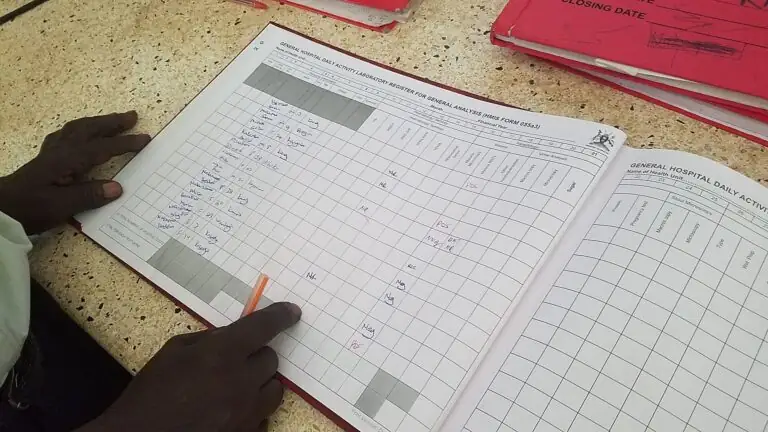
The team reviewed eight genomic data sharing agreements from three research-intensive Ugandan institutions, kept anonymous as A, B and C. A fourth institution declined to share its documents. The agreements were checked against a list drawn from the African Union’s Malabo Convention and Uganda’s Data Protection and Privacy Act, covering data ownership, protection and security, access, intellectual property and benefit sharing. The findings were tested through interviews with 41 people: 15 researchers, 3 legal representatives, 14 research ethics committee members and 8 national regulators.
What they found
All three institutions used data sharing agreements, which the Uganda National Council for Science and Technology requires for collaborative research. Most stated that data ownership stayed with the provider. However, none of the eight agreements contained any statement on benefit sharing, and ethics committee members confirmed that Uganda has no benefit-sharing framework for genomic research.
Detail varied widely. Institution A’s agreements were the most thorough, including password-protected databases and a ban on third-party access, and it was the only one with explicit intellectual property clauses. Institution C named the platforms used to share data but did not say who could use them. Institution B’s agreements were the least detailed. Only at Institution C did the legal team consistently review agreements.
Interviewees said consent was often treated as a procedure rather than a meaningful process, that once data leaves the country there is often no way to track how it is used, and that genomic data linked to location can expose communities to stigma.
Why it matters
Genomic research in Uganda depends heavily on international partnerships. The authors warn that the absence of benefit-sharing terms could leave participants, communities and early-career local researchers open to exploitation. They recommend common minimum standards for agreements, legal support for researchers, research ethics committees at every institution, and participatory policy development informed by models such as H3Africa.
Limits
Only eight agreements were available, partly because such agreements are new and often not stored centrally. The review recorded whether provisions were present but did not weigh their quality, and no benchmark institution was included for comparison.
Sources

About the writer
Researchnews.Africa Newsroom
Reporting by the Researchnews.Africa newsroom in Kampala.
All articles by Researchnews.Africa DeskResearchnews.Africa follows our editorial standards. Spotted an error? Tell us how to correct it.
Share this story