Human Movement Drove Early Spread of 2026 Bundibugyo Outbreak, Congolese-Led Science Study Finds
A study led by Congolese public health institutions and published in Science shows that travel out of the outbreak epicentre in Ituri, not population size, best explained where Bundibugyo virus disease appeared next in the outbreak's first weeks.

By Researchnews.Africa Desk
· 3 min read

Human movement, rather than geography or population size, was the main force behind the rapid early spread of the 2026 Bundibugyo virus disease outbreak in the Democratic Republic of the Congo, according to a new study published in the journal Science.
The research was led by the Institut National de Recherche Biomédicale (INRB) and the Institut National de Santé Publique (INSP) in the DRC, working with more than 50 scientists from over 25 institutions. Partners included the University of Kinshasa, Africa CDC, the World Health Organization, the Pandemic Sciences Institute at the University of Oxford, Northeastern University, Imperial College London, Institut Pasteur and the Flowminder Foundation.
What the team found
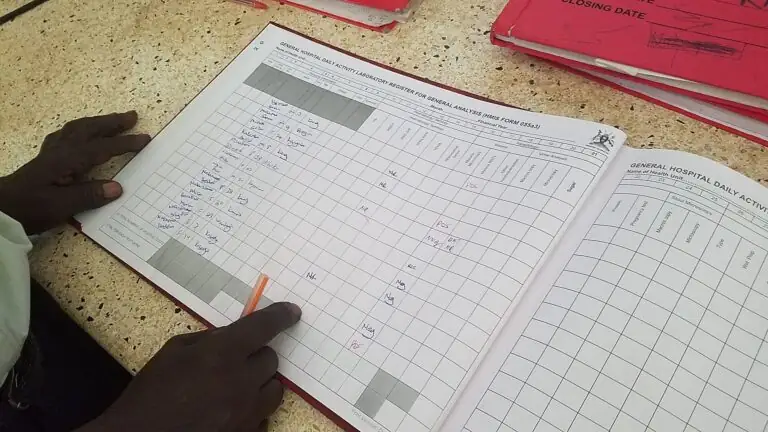
By combining detailed case and testing records with anonymised mobility data drawn from mobile phone networks, the researchers reconstructed the first weeks of the outbreak in Ituri and neighbouring provinces. They estimate that cases doubled roughly every 10 days between early May and 1 June 2026.
The outbreak was declared on 15 May 2026. WHO designated it a Public Health Emergency of International Concern two days later, and Africa CDC declared a Public Health Emergency of Continental Security a day after that. Within three weeks, 12 more health zones and 49 more health areas had reported confirmed cases.
Using movement flows out of the epicentre towns of Mongbwalu, Bunia and Rwampara, the team predicted which health zones would go on to report cases with very high accuracy. According to the University of Oxford release, these mobility-based predictions far outperformed models that relied on population size alone.
Science led from within Africa
The authors stress that the sequencing, diagnostics and epidemiological analysis were carried out in Kinshasa and Bunia while the outbreak was still growing. Senior author Professor Placide Mbala-Kingebeni of INRB and Africa CDC contrasted this with earlier outbreaks, recalling that “Twenty years ago, samples left this country and answers came back months later.”
Co-first author Professor Pierre Akilimali of INSP and the University of Kinshasa School of Public Health said the work shows what national public health institutions can deliver when they receive proper investment. The analyses were shaped by practical questions from response teams, including where to send resources and how much money would be needed to care for patients.
Why it matters
The researchers argue that mobility and travel-time data, available within days of an alert, can show responders where a virus is likely to travel next, so that surveillance, testing and care can be set up ahead of the epidemic wave. For countries in the Great Lakes region with heavy cross-border movement, this offers a practical tool for future outbreak preparedness.
Bundibugyo virus is a type of orthoebolavirus, and no approved vaccines or treatments currently target it, although a vaccine and therapeutic trial is under way. The consortium behind the study, first funded by the Gates Foundation, is now supported by the Coalition for Epidemic Preparedness Innovations as the B-REACT network led by INRB. First author Professor Dav Ebengo said future work will focus on detecting outbreaks earlier through decentralised laboratories along major movement corridors.
The study covers the early phase of the outbreak only, and its predictions relate to which health zones reported cases during that period.
Sources

About the writer
Researchnews.Africa Newsroom
Reporting by the Researchnews.Africa newsroom in Kampala.
All articles by Researchnews.Africa DeskResearchnews.Africa follows our editorial standards. Spotted an error? Tell us how to correct it.
Share this story